UT Southwestern Medical Center · Dallas, Texas
Spatiotemporal Regulation of Cellular Metabolism
We study how cells organize metabolic pathways in space and time — from single enzymes to whole organelles — to meet changing metabolic demands.
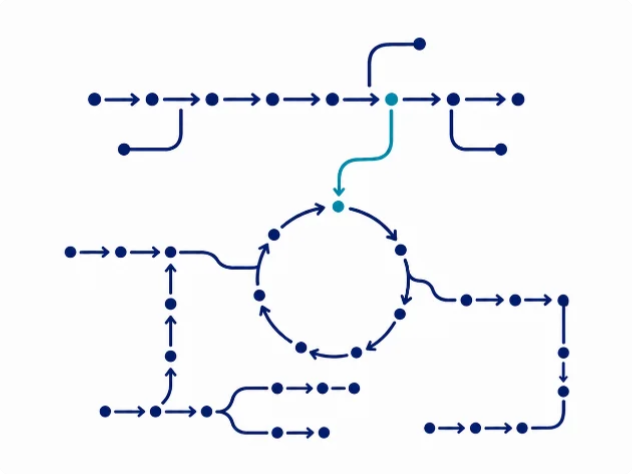
How does a cell handle so much complexity at once — and still get every reaction to the right place at the right time?
Cells rely on metabolism to generate the energy and molecular building blocks needed for growth, differentiation, and survival. Metabolism is usually taught as a series of biochemical reactions driven by random diffusion — yet it remains unclear how such seemingly stochastic processes can efficiently support complex cellular demands.
Our lab asks how cells actively organize metabolic pathways in space and time to meet changing physiological needs. We study how reactions are compartmentalized — from the level of individual enzymes to entire organelles — to regulate metabolic flux and cellular behavior, and what that compartmentalization means for health and disease.


04 — Join our team
Curious, independent, collaborative.
Postdocs: we are seeking researchers with backgrounds in biochemistry, cell biology, or metabolism who want to develop their own ideas in this area — send a brief introduction and CV. Graduate students: if organelle dynamics and cellular metabolism excite you, contact us or stop by the lab in NL7.110G.